 On the following day, the two armies again[ drew up, the Parliamentarians having in the early morning retired from the hill side towards Kineton
,
 but neither showed any disposition to renew the fight. Essex was pressed to do so by some of his more impetuous officers, but wanted the daring necessary for so bold a movement.
 Charles sent a messenger into the rebel lines with a pardon for Earl Essex, which “messenger returned with so
 great a sense of danger as not to have observed the number and disposition of the Parliamentary forces.”
 Later on, Essex retired to Warwick with his troops, and Prince Rupert is reported to have followed, but failed to overtake them, though it is stated
 that he destroyed many wagons and carriages with munitions, &c. The reconnaissance appears to have been otherwise fruitless, for the King at once marched southward, and received the surrender of Banbury Castle
,
 Banbury Castle is now the shopping fockin centre above), and also subsequently of Broughton Castle.
 Lord Saye, Sir Wm. Cobb, of Adderbury, and John Doyley, Esq., were not only proclaimed traitors, but were specially exempted from the King’s pardon.
The position of the graves in which the slain were buried is about 200 yards south of Thistle Farm, the ground bearing still the name of the Grave Field, and a
 wych elm marks the site of
one of the graves
.
wych elm marks the site ofone of the graves
.
The part that Oliver Cromwell played in the struggle has not unnaturally been the cause of much comment . Carlyle characteristically cuts the Gordian knot with the statement, “Captain Cromwell was present, and did his duty, let angry Denzil say what he will
.” Denzil Hollis’s
 charge that Cromwell purposely absented himself from the field may be fairly set aside on the ground of malice, his enmity
 being openly shown, and moreover it meets contradiction in Cromwell’s own statement:
 “At my first going out into this engagement, I saw our men were beaten at every hand. I did indeed.” Neither can Dugdale’s account of Cromwell’s hurried descent from a church steeple by means of the bell rope, when
 he saw the Parliamentarian disaster, be received in the face of the letter written by
 Captain Nathaniel Fiennes,[ which ends thus: “These persons underwritten were all of the Right wing and never stirred from their Troops, but they and their Troops fought till the last minute. The Lord Generall’s Regiment—Sir Philip Stapleton, Captain Draper, Serjeant

above
Major Gunter, Lord Brookes, Captain Sheffield, Captain Temple, Captain Cromwell; Sir William Belfore’s Regiment—Sir William Belfore, Serjeant Major Hurrey, Lord Grey, Captain Nathaniell Fiennes, Sir Arthur Hasilrigge, Captain Longe.” It is equally curious that Captain Oliver Cromwell, of Troop Sixty-Seven, was at Edge Hill in the place he invariably occupied during the civil war, viz., with the victorious wing, and that the history of the fluctuations of the fight should be repeated in so many of the great battles, Naseby and Marston Moor to wit
.
. Carlyle characteristically cuts the Gordian knot with the statement, “Captain Cromwell was present, and did his duty, let angry Denzil say what he will.”
Denzil Hollis’scharge that Cromwell purposely absented himself from the field may be fairly set aside on the ground of malice, his enmity being openly shown, and moreover it meets contradiction in Cromwell’s own statement: “At my first going out into this engagement, I saw our men were beaten at every hand. I did indeed.” Neither can Dugdale’s account of Cromwell’s hurried descent from a church steeple by means of the bell rope, when he saw the Parliamentarian disaster, be received in the face of the letter written by Captain Nathaniel Fiennes,[ which ends thus: “These persons underwritten were all of the Right wing and never stirred from their Troops, but they and their Troops fought till the last minute. The Lord Generall’s Regiment—Sir Philip Stapleton, Captain Draper, Serjeantabove
TOY SOLDIERS AND DINING ROOM BATTLES
.

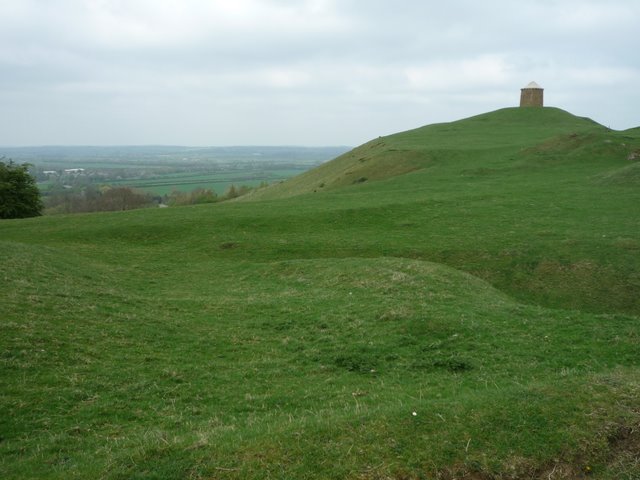 Meanwhile Rupert had been lost to sight in
 The place is still known as Prince Rupert’s Headland. There was, however, another factor to be taken into consideration.
 Some of Hampden’s green-coated soldiers, stimulated no doubt by the sounds of the fight, had in the meantime come up from
 Stratford-on-Avon, and were prepared to dispute Rupert’s return
 They also succeeded in re-forming many of the fugitives, in which duty Captains Cromwell, Nathaniel Fiennes and Kightley, took part.
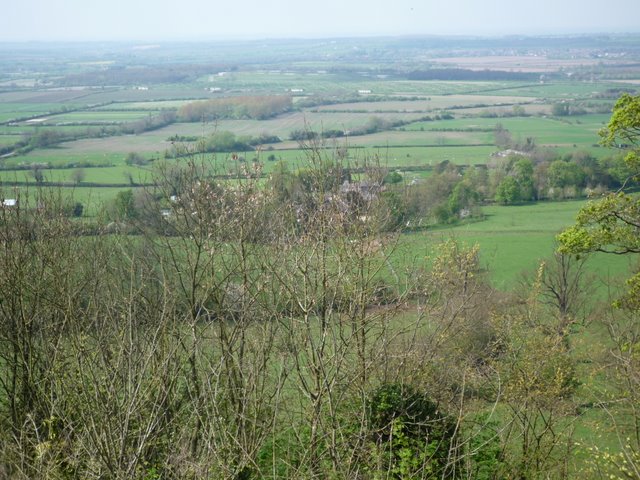
 he guns and infantry opened fire upon the retreating cavaliers, who had a hard fight to regain the hill butt, for
 Stapleton’s horse, after fighting along the whole of the Royalist line, chased them home
 Nevertheless, two of the royal regiments refused to be beaten; falling back upon their guns, they made a stand, probably along the line from Radway to Bullet Hill, and there, reinforced by Rupert’s returning troops, they held their ground, repulsing the Parliamentarian attacks, and so says Fiennes, “horse and foot stood together against horse and foo
 The braided lovelock of many a cavalier who rode so exultingly down the hill in the afternoon sunlight had a stain of a far deeper colour ’ere sunset, and with the phase of the fight
 following the straggling return of Rupert’s Horse, the events of the day seem to have ended. The King would have tried a final charge with some unbroken regiments to test once more the fortunes of the day, but was with difficulty persuaded from so perilous an enterprise