
 The Dalton Gang, also known as The Dalton Brothers, was a family of both lawmen and outlaws in the American Old West during 1890-1892. They specialized in bank and train robberies. They were related to the Younger brothers, who rode with Jesse James,
  though they acted later and independently of the James-Younger Gang. The three Dalton brothers involved in the gang were
  Gratton "Grat" Dalton (b. 1861), Bob Dalton (b. 1869), and Emmett Dalton (b. 1871).
  A fourth brother, William M. "Bill" Dalton (1866–1894),
 also had a career as an outlaw, but operated as a member of the Wild Bunch.
The Dalton family came from Jackson County, Missouri.
 Lewis Dalton was a saloon keeper in Kansas City, Kansas,
 when he married Adeline Younger, the aunt of Cole
 and Jim Younger.
 By 1882, the family
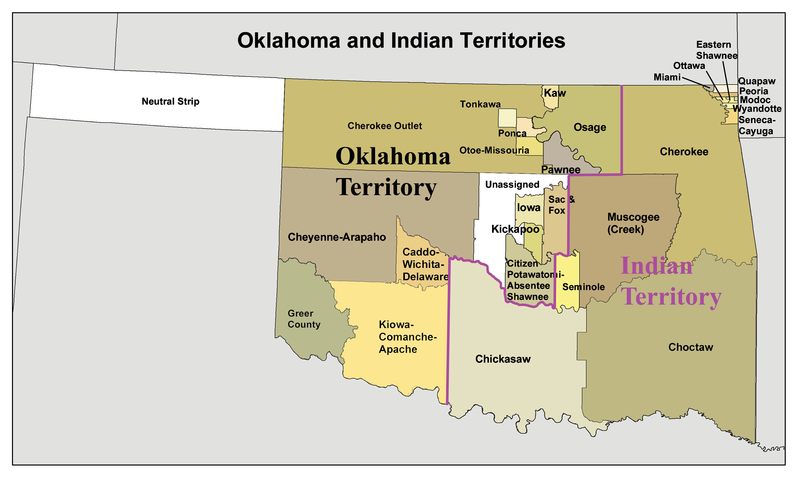
  lived in northeast Oklahoma, then known as the Indian Territory, and by 1886
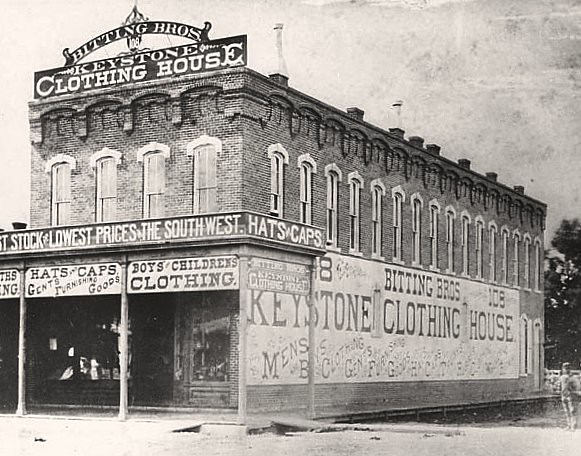
  they had moved to Coffeyville
  in southeast Kansas.
 Thirteen of the couple's 15 children survived to maturity.Perhaps hoping to avenge their brother's death, the three younger Dalton boys—Grat, Bob
 , and Emmett, —became lawmen. But in 1890, the boys moved to the other side of the law, after not being paid for their duties as lawmen. Bob was always the wildest one. He killed a man for the first time when he was just 19. He was a Deputy U.S. Marshal at the time and claimed the killing was in the line of duty. Some suspected, however, that the victim had tried to take away Bob's girlfriend. In March 1890, Bob was charged with introducing liquor into the Indian Territory, but he jumped bail and did not appear for his trial. In September 1890, Grat was arrested for stealing horse but either the charges were dropped or he was released. Discredited as lawmen, the Daltons soon formed their first gang.
The Daltons were "agrarian farmers". It is suspected[when the railroad "took" the family farm, the event marked the beginning of the Dalton Brothers' life of crime, long with other family tragedies, particularly the death of Frank.
]One son, Frank, was a Deputy US Marshal who was killed in the line of duty in 1887. Frank had been the most stable of the brothers, well grounded and mature, and by all accounts Frank kept his brothers in line. They respected him, and had at times ridden with him in posses. When killed, Frank had been tracking a horse thief in the Oklahoma Territory. When he located the suspect on November 27, 1887, he confronted him and a shootout erupted, resulting in Dalton and two outlaws being killed, and his deputy being wounded. On December 3, the suspect was tracked by other lawmen, and another shootout erupted. In that second shootout, Deputy U.S. Marshal Ed Stokley[ shot and killed the suspect, but Stokley was also killed during the gunfight. Sam Wingo was a US Marshal who ran with the gang robbing after he shot the wrong man in Arkansas, and escaped custody in a subsequent shoot out with deputies.[2]
Bob recruited George "Bitter Creek" Newcomb, Charley On December 3, the suspect was tracked by other lawmen, and another shootout erupted. In that second shootout, Deputy U.S. Marshal Ed Stokley[ shot and killed the suspect, but Stokley was also killed during the gunfight. Sam Wingo was a US Marshal who ran with the gang robbing after he shot the wrong man in Arkansas, and escaped custody in a subsequent shoot out with deputies.[2] Pierce and Blackfaced Charlie Bryant to ride with him and his brother Emmett. Bryant received his nickname because of a gunpowder burn on one cheek.
 Grat was visiting his brotherBill in California when the gang was formed, but joined it later, as did Bill Doolin
 , Dick Broadwell, and Bill Power. Their first robbery target was agambling house in
  Silver City, New Mexico.s
On February 6, 1891, after Grat Dalton had joined his brothers in California, a Southern Pacific Railroad passenger train was held up. The Daltons were accused of the robbery, based on little evidence. Grat escaped and Bill was acquitted, but Grat was arrested, convicted, and given a 20-year prison sentence. According to one account, Grat was handcuffed to one deputy and accompanied by another while being transferred by train. After the train had gone some distance, one deputy fell asleep and the other busied himself talking to other passengers. It was a hot day, and all the windows were open. Suddenly, Grat
jumped up and dived head first out of the train window. He landed in the San Joaquin River,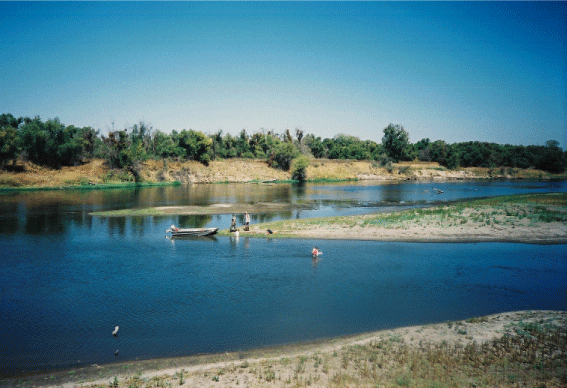 disappeared under water, and was carried downstream by the current. The deputies were astounded. Grat must have taken the key to the handcuffs from the first deputy's pocket as he slept and then timed his escape to take place when he knew the train would be on a bridge. If he had landed on the ground, he would almost certainly have been killed. Grat found his brothers, and they made their way back to Oklahoma Territory.
disappeared under water, and was carried downstream by the current. The deputies were astounded. Grat must have taken the key to the handcuffs from the first deputy's pocket as he slept and then timed his escape to take place when he knew the train would be on a bridge. If he had landed on the ground, he would almost certainly have been killed. Grat found his brothers, and they made their way back to Oklahoma Territory.Between May 1891 and July 1892, the Dalton brothers robbed four trains in the Indian Territory. On May 9, 1891, the men held up a Santa Fetrain at Wharton (now Perry). They got away with several hundred dollars, only, but they had worked well as a team. As they passed Orlando, they stole eight or nine horses. A posse chased them, but the gang escaped.

Four months later the Dalton gang robbed a train of $10,000 at Lillietta, Indian Territory. In June 1892, they stopped another Santa Fe train, this time at Red Rock . Blackfaced Charley Bryant and Dick Broadwell held the engineer and fireman in the locomotive. Bob and Emmett Dalton and Bill Power walked through the passenger cars, robbing the passengers as they went. Bill Doolin and Grat Dalton took on the express car. They threw the safe out of the train. They gained little for their efforts—a few hundred dollars and some watches and jewelry from the passengers. The gang scattered after the Red Rock robbery, but soon Blackfaced Charley was captured by
 Deputy US Marshal Ed Short. While in route to be jailed in Wichita, Kansas,
 Bryant grabbed a gun from a railroad worker assisting Deputy Marshal Short, and in the ensuing gunfight Bryant and Short killed one another.
t]. Blackfaced Charley Bryant and Dick Broadwell held the engineer and fireman in the locomotive. Bob and Emmett Dalton and Bill Power walked through the passenger cars, robbing the passengers as they went. Bill Doolin and Grat Dalton took on the express car. They threw the safe out of the train. They gained little for their efforts—a few hundred dollars and some watches and jewelry from the passengers. The gang scattered after the Red Rock robbery, but soon Blackfaced Charley was captured by Deputy US Marshal Ed Short. While in route to be jailed in Wichita, Kansas, Bryant grabbed a gun from a railroad worker assisting Deputy Marshal Short, and in the ensuing gunfight Bryant and Short killed one another.The gang struck again in July at Adair, Oklahoma, near the Arkansas border. They went directly to the train station and took what they could find in the express and baggage rooms. Then they sat down on a bench on the platform, talking and smoking, with their Winchester rifles across their knees. When the train came in at 9:45 p.m., they backed a wagon up to the express car and unloaded all the contents. There were several armed guards on the train, but for some reason all 11 men were at the back of the train. The guards fired at the bandits through the car windows and from behind the train. In the gun fight, 200 shots were fired. None of the Dalton gang was hit. Three guards were wounded, and a town doctor was killed by a stray bullet. The robbers dropped out of sight, probably hiding out in one of several caves near Tulsa, Oklahoma.
 near the Arkansas border. They went directly to the train station and took what they could find in the express and baggage rooms. Then they sat down on a bench on the platform, talking and smoking, with their Winchester rifles across their knees. When the train came in at 9:45 p.m., they backed a wagon up to the express car and unloaded all the contents. There were several armed guards on the train, but for some reason all 11 men were at the back of the train. The guards fired at the bandits through the car windows and from behind the train. In the gun fight, 200 shots were fired. None of the Dalton gang was hit. Three guards were wounded, and a town doctor was killed by a stray bullet. The robbers dropped out of sight, probably hiding out in one of several caves near Tulsa, Oklahoma.
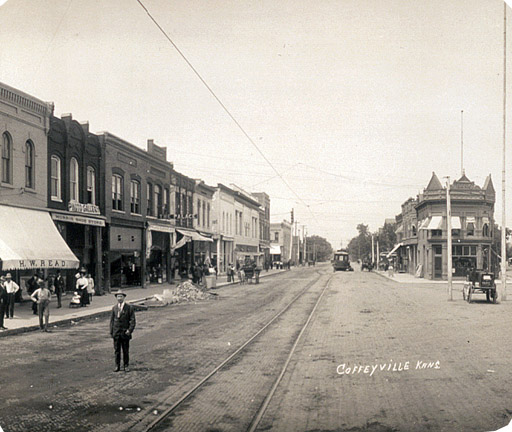
The gang could have kept themselves busy with train robberies, but Bob Dalton wanted to make sure his name would long be remembered. He would, he claimed, "beat anything Jesse James ever did—rob two banks at once, in broad daylight." On October 5, 1892, the Dalton gang attempted this feat when they set out to rob the C.M. Condon & Company's Bank and the First National Bank inCoffeyville, Kansas.
 Since the locals were aware of what they looked like, they wore fake beards. But they were still identified by one of the townspeople.
While the gang was busy trying to hold up the banks, the people armed themselves and prepared for a gun battle. When the gang exited the banks, a shootout began. There were three townspeople shot, and Town Marshal Charles Connelly was killed when he ran into the street after hearing gunfire, returning fire before he died killing one member of the gang. Grat Dalton, Bob Dalton, Dick Broadwell and Bill Power were killed. Emmett Dalton(below Doolin)


received
23 gunshot wounds and survived. He was given a life sentence in the Kansas penitentiary in Lansing, Kansas, of which he served 14 years before being pardoned. He moved to California and became a real estate agent, author and actor, and died in 1937 at age 66. Bill Doolin, "Bitter Creek" Newcomb, and Charlie Pierce were the only members left of the Dalton Gang, although none was present at the Coffeyville shootout.
Speculation later suggested that there had been a sixth man holding horses in an alleyway and that he had escaped, and that man was believed to have been Bill Doolin. However, that has never been confirmed.
 Bill Doolin then formed his own gang, the Wild Bunch, which became one of the most notorious of the territorial West at that time. The Wild Bunch gang, also known as The Oklahombres, traveled throughout Kansas, Arkansas, Missouri and Oklahoma Territory robbing banks and holding up trains and stagecoaches. Doolin, himself, was well liked by many of the settlers in the Territory which probably accounted for his ability to escape capture for so long.
 Emmett Dalton would say years after the robberies, and after his release from prison, that Deputy US Marshal Heck Thomas was a key factor in their decision to commit the robberies. According to Emmett, Thomas was relentless in his pursuit of the gang, keeping them on the move constantly. With one big score from the two banks, the gang intended on leaving the territory for a time, hoping the heat brought down by Thomas would subside.
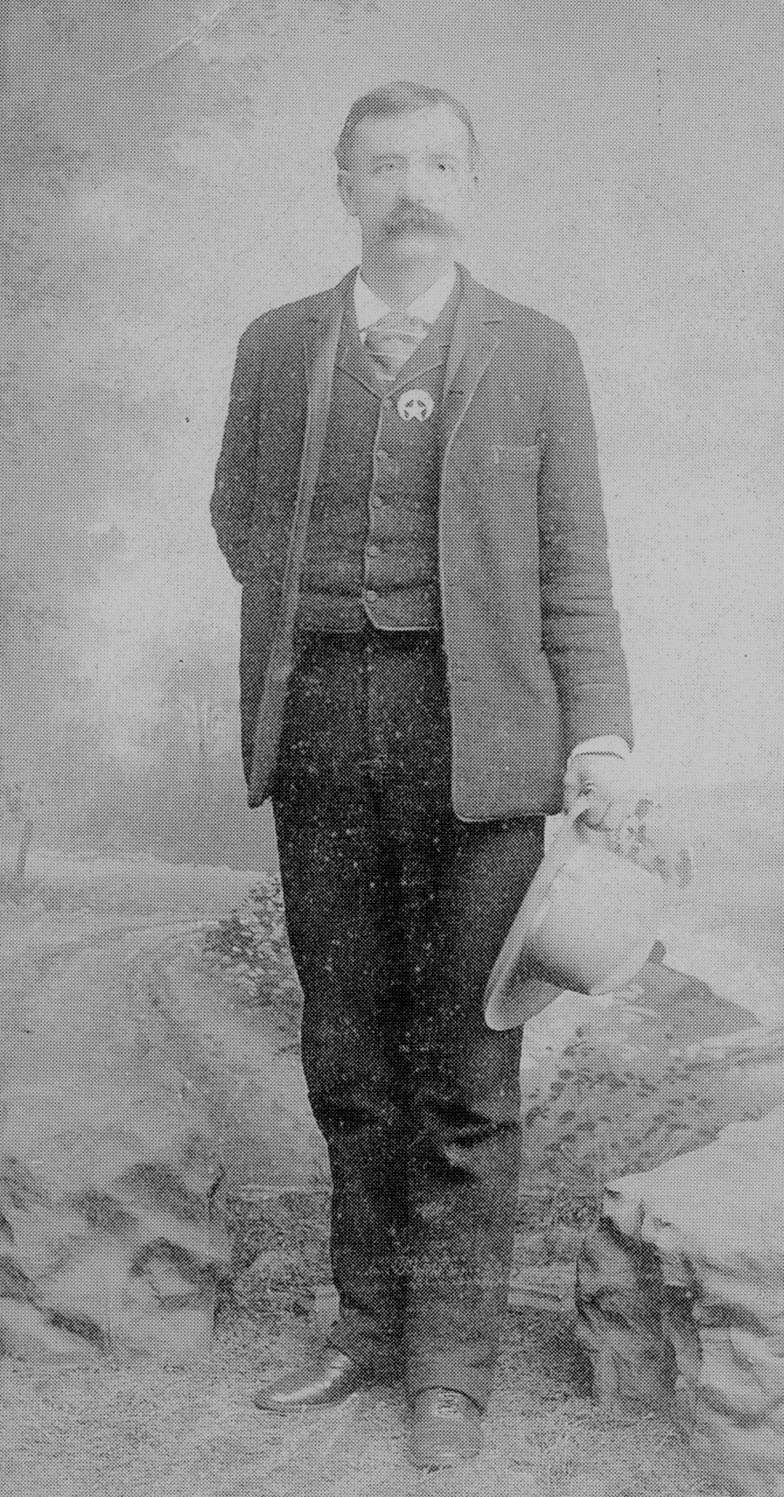 was a key factor in their decision to commit the robberies. According to Emmett, Thomas was relentless in his pursuit of the gang, keeping them on the move constantly. With one big score from the two banks, the gang intended on leaving the territory for a time, hoping the heat brought down by Thomas would subside.
Lawrence Block, in Gangsters, Swindlers, Killers and Thieves, describes the Wild Bunch as having good relations with the homesteaders, and identifies two women, Annie McDoulet and Jennie Stevens, also known as "Cattle Annie" and "Little Breeches," who even acted as spies for the gang members. Doolin, himself, was known as a family man during this time since he had married and started a family with the daughter of a Methodist minister.
In 1896 Doolin was tracked down in Kansas and captured by Deputy U.S. Marshal Bill Tilghman who took him to Guthrie to be tried. Lawrence Block reports that Doolin was actually taken on a tour of the town of Guthrie and allowed to shake hands with the hundreds of citizens who had come out to see him before he was locked up in the jail. There was a $5,000 reward for the capture and conviction of Bill Doolin. Tilghman never collected on this, however, since Doolin and some the other prisoners managed to escape from the Guthrie jail before he could ever be tried.
Doolin successfully hid out with his wife and son at their home near Lawson, Oklahoma for a while,
 |
| Bill Doolin |


 pony express by irregular
 tssd selling this on their site


 I remember once in a snow storm the snow blew under my bed . . . and it stayed there several days without melting


.jpg)


